
Intel Shows Off 512GB Optane Drive With 3D XPoint Technology That Fits in DDR4 Slot

Intel Optane SSD 512GB with 3D XPoint

Yesterday afternoon at Storage Visions Bev Crair, Vice President and General Manager, Storage Group at Intel Corporation was speaking and just happened to hold up an early mechanical sample 512GB NVDIMM that  utilizes 3D XPoint (Intel’s upcoming non-volatile memory technology) on the DDR4 memory interface to communicate directly with the CPU. This was particularly exciting for us as it was the first time that we have seen and were actually able to touch a product that was using 3D XPoint. 
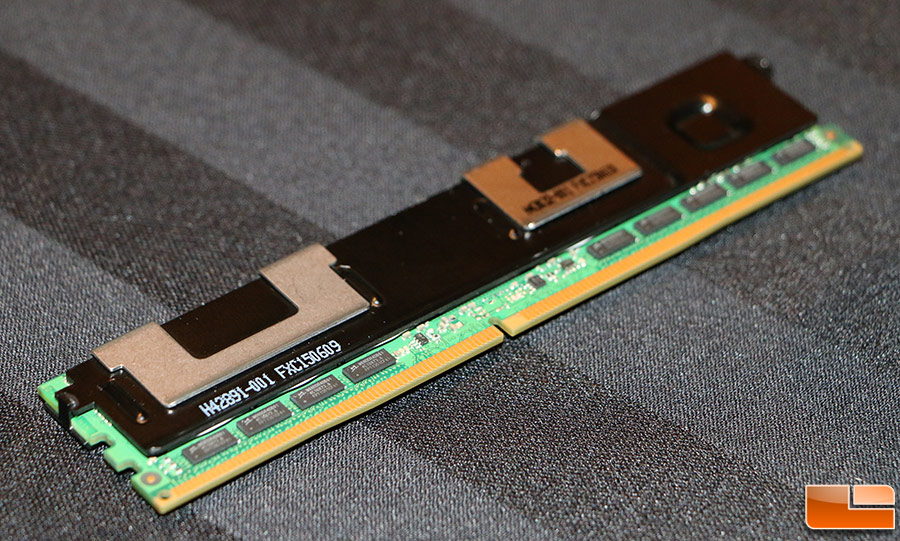
Intel Optane 512GB

Intel stated that they are working on 128GB, 256GB and 512GB 3D XPoint NVDIMM DIMMS that are aimed for the server/enterprise market. Note the raised FPGA section in the middle of the heatsink.
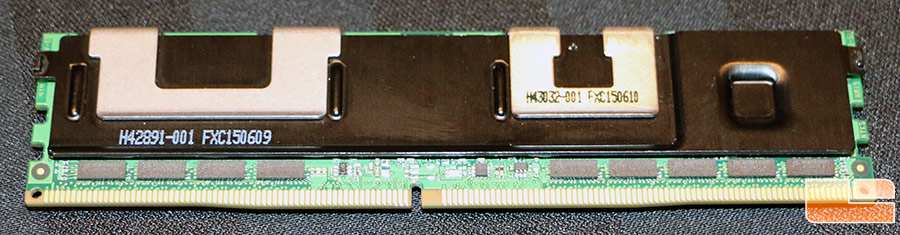
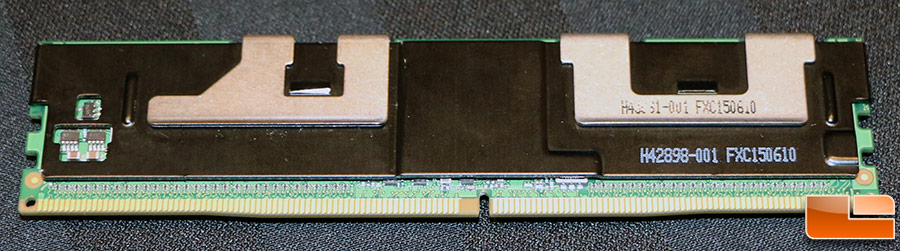
Intel Optane 512GB SSD

Intel Optane 3D Xpoint

Intel’s recently acquisition of Altera makes more sense now after seeing this product as Intel’s leading-edge products and manufacturing process with Altera’s leading field-programmable gate array (FPGA) technology are a pretty good fit for one another. Altera has a FPGA-based SSD controller and it will be interesting to know what Intel us using under that heat spreader.

We expect to see Intel 3D XPoint technology being sold under the name Optane in the second half of the year. With Intel Kaby Lake CPUs and Optane drives due up later this year it is looking like it will be an exciting time and a great time to build a new system.  Intle has hinted that Optane products will offer speeds over seven times faster than traditional SSDs (we are guessing that means SATA III SSDs), that means we could be in for a real treat!  

Print
  • Jason Cordes

    can you run it in raid -0 ?

  • Karsten Langenfeld

    So. this is a persistant memory chip? Or is it more like SSD? I mean.. the amount of memory is immense, but doesnt mean it being a drive that you actually store data on it? Will this make it possible to turn computers off and on again and go straight to the OS?

  • mike dar

    Looks like it can be plugged into a X99 board but will it run at ‘bragged about speeds, with the x99 chipset.

  • brubble

    neat-o! True advancements.

  • koneko

    i cant wait to watercool them xD

  • Mangap

    using DDR 4 Slot is the fastest way to go into the market.
    but how about optimum speed ? I hope everybody preparing for new motherboard to maximize it

  • ldo

    What about the architecture to support Optane (i.e., chipset, motherboard, CPU) ?
    New build will have to wait until all components are available.

  • xyriut

    If we’ve already maxed out the SATA3 interface, and PCIe is burdened by DMI, why both increasing this market for consumer-level stuff? I’m thinking this is enterprise-only, in addition to the fact that the basic consumer won’t even be able to perceive the difference, even if it’s measurable.

  • wow – possible game changer

    • Vioner

      not possible, it’s inevitable and sure – this is the huge leap forward in IT.

  • Later

    It’s about time they got rid of HDDs with spinning disks , that’s so ancient tech !

    • tyler1489

      but photos, videos, and random stuff take up so much space! you don’t need an ssd for those things! that’s why 1TB+ HDD market is alive

      • Later

        Yeah , the cost of ssds would be in parity or even lesser than spinning hdds

  • grizy2033

    When we have it for desktop people?
    And its better than NRAM from Nantero?

    • Patrick Proctor

      Kaby Lake on the Z270 chipset.

  • John Fak

    3.5 GBytes/sec is not bad, but not far from the current top NVM drives.
    If Optane really wants to enter and change things up, it has to offer more.

    • R Najib

      Hi, can I ask you where did you find the 3.5GBytes/sec ? Thank you

      • Corey Feldman-Haim

        I think from the 7x faster than a traditional ssd, most traditional sata III ssds top out at around 500MB/s.

    • Patrick Proctor

      4x the density though. And it has 40x the endurance of NAND flash.

  • John Fak

    Isnt this pointless without a re-architecture of the way the OS uses the memory? So far there were no words about this.

    • ldo

      Sure would like some info from the various manufacturers on their supporting CPUs, motherboards, and chipsets which will be required to handle this new memory.
      Just having the “memory” without the supporting architecture will mean absolutely nothing.
      Guess my new “build” will be put in “cloak mode” for a couple of years.

      • Yeltnerb1

        The Z270 platform will be the first platform to support 3D XPoint memory.

      • Patrick Proctor

        Power 9, Sparc M8, and Kaby Lake will all support it. I imagine Intel is also already working out solutions for Broadwell E5 and E7 platforms.

    • 700% faster drive in itself is improvement regardless. Also, most os already have SLEEP mode.
      Of course eventually cpu with huge cache and skip external dram.

    • Mangap

      OS need to be improved to optimize it.
      without that we can see speed improvements, but not maximal

      • koneko

        so we would need a windows 11 a bios / motherboard update and maybe a new processor? welp

  • shadowhedgehogz

    Very interested if it boosts overall PC speed, especially game map load times etc by a significant amount over regular SSD.

    • thanat0s2k

      If you want to leave your SSD buddies in the dust just run your games from a ramdisk. Even 48gb is enough to run a 32gb ramdisk + 16gb for actually running stuff, but 64gb is possible on most 1151 boards and can go to 128 on most 2011-3 boards.

      • grizy2033

        yeah that its a good option until NRAM from Nantero arrive where are 100x more fast than DRAM no SSD.

  • YOUDIEMOFO

    I wonder if this is going to be something to go alongside of Nvidias NVLINK proprietary technology, or to go against it…?

    I am so excited to hopefully have the opportunity to build a new system with the many advancements in technology moving so fast. I just want to make sure I’m tracking the right tech, so I can make the right choices…

    • Riely Rumfort

      Well, optane will be quick, but speed is hardly the limit. I find size and efficiency(portability and stability) to be key factors myself. I love a swift kick with a little footprint. I’m eyeballing mini-STX if KabyLake impresses me graphically, or an optane/ssd/nvidiaPascal laptop with usb 3.1.
      I really like efficiency though note you.

      • YOUDIEMOFO

        Yes I mostly agree. Either way I’m one for monster systems (rig in avatar) and just want the most bang for my buck this time around. Last build money was no object, but that was a one off situation. I’ll be putting everything under water with the same case/cooling system I already have for a few more years to come……(hopefully).
        That is unless future tech is powerful and efficient enough, but I am an overclocked so I will.most likely require a killer cooling system.

        • Riely Rumfort

          If you’re after bang for buck 2 year old tech is the sweet spot, m.2 boots in raid, sandisk ssd in raid, corsair ram, and depending on what you do with it and Overclocked 6 core or for media processing Broadwell-E, on an MSI board with the bells and whistles of it’s gen. All depending on application of course.

        • YOUDIEMOFO

          I have raid 0 on my SSD’s now and use ramdisk here and there as I’ve got 64gb of RAM. I would like to have more on my raid, but my current board/config (RIVE) does not allow for more expansion cards due to to many graphics cards. Couple that with lack of support for more than two drives in raid 0 on the board and I’m hanging on until an upgrade.
          One funny thing was that a guy from Asus could not guarantee that if I added an expansion card via a riser ribbon It was actually going to work. The PCI express lanes are pretty much all taken up from the graphics cards. And he couldn’t tell me what would happen with a PCI express expansion card running raid. So I decided to can it and just wait.

    • Patrick Proctor

      Omnipath is going up against NVLink. This is just a new memory technology.

      • YOUDIEMOFO

        Thank you for clearing that up.

  • Steve Casselman

    Nice and great for Big Data.